What’s ‘mood’ got to do with it?
First, let’s clear something up - the distinction between the value of a mood board and of an inspiration board. This is how I see it - the value of mood boards/inspiration boards - a vision of creative alternatives for creatives, not clients.
You've heard the term "mood board" a thousand times. Every creative, consultant, and Pinterest enthusiast uses it - often to describe a collage of images meant to show a client the "vibe" of a project. But what if that widely accepted definition is, in my opinion, fundamentally wrong?
This confusion seems to stem from a widely-held misconception that the mood board - a tool best suited for client communication in, say, interior design - is the same as the vital, internal compass used by designers such as: branding, marketing, advertising … creatives. This internal tool, the inspiration board, is the true north for a creative team, and it's not meant for client sign-off. It’s time to retire this misused term and bring clarity back to the design process.
inspiration boards are a source of compiled and somewhat organized information, both verbal and visual for the purposes of guiding more directly but not conclusively - a way of thinking. It is a tool for the purpose of solving for your client’s problem. These boards are for all the creatives involved in the project, to be aligned with a ‘flavour’, a direction, a style, to aid in your inspirational process.
There are many tools out there now. Find the one that works best for you. If you are going use an electronic tool, I would try to have a board that allows you to have an ‘infinite white space’. I use multiple sources to collect inspiration - paper/pen, my cell phone for quick imagery and colour, my sketch book, …. Then I digitally or analogically create a board with choices, after again considering my client’s needs for the project and their specified audience.
May I suggest 2 electronic white board options: FigJam and MIRO. - find whatever works best for you. Recently I have discovered Adobe’s FireFly boards can be used to ideate. Try using their SubPrompts and ReMix tools.
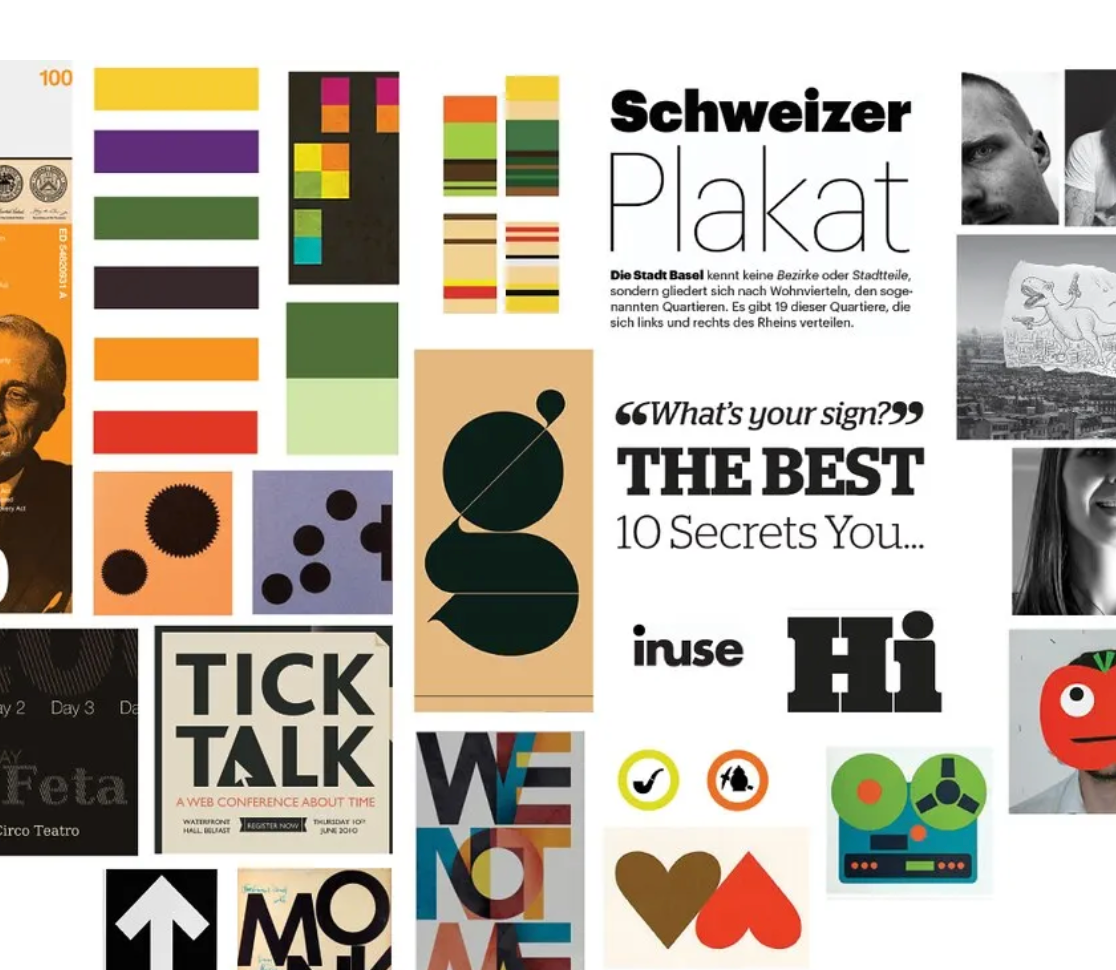
As mentioned above when putting together your inspiration board, you must also use words - even more than an image, they can clarify the direction. Using language can help to steer the choices of imagery.
For example - The word funny can also mean - whimsical or silly or slapstick or hilarious etc. These words can help understand the ‘inside scoop’ of the feeling to be achieved. Using language can help to steer the choices of imagery. Mind mapping is another tool which works for some. It takes advantage of ‘stringing’ thoughts together to see the path they take and where they lead. It is usually only done with words.
With the example above, you can see the suggestions of type directions - not the word adjectives I was referring to - don’t get this confused.
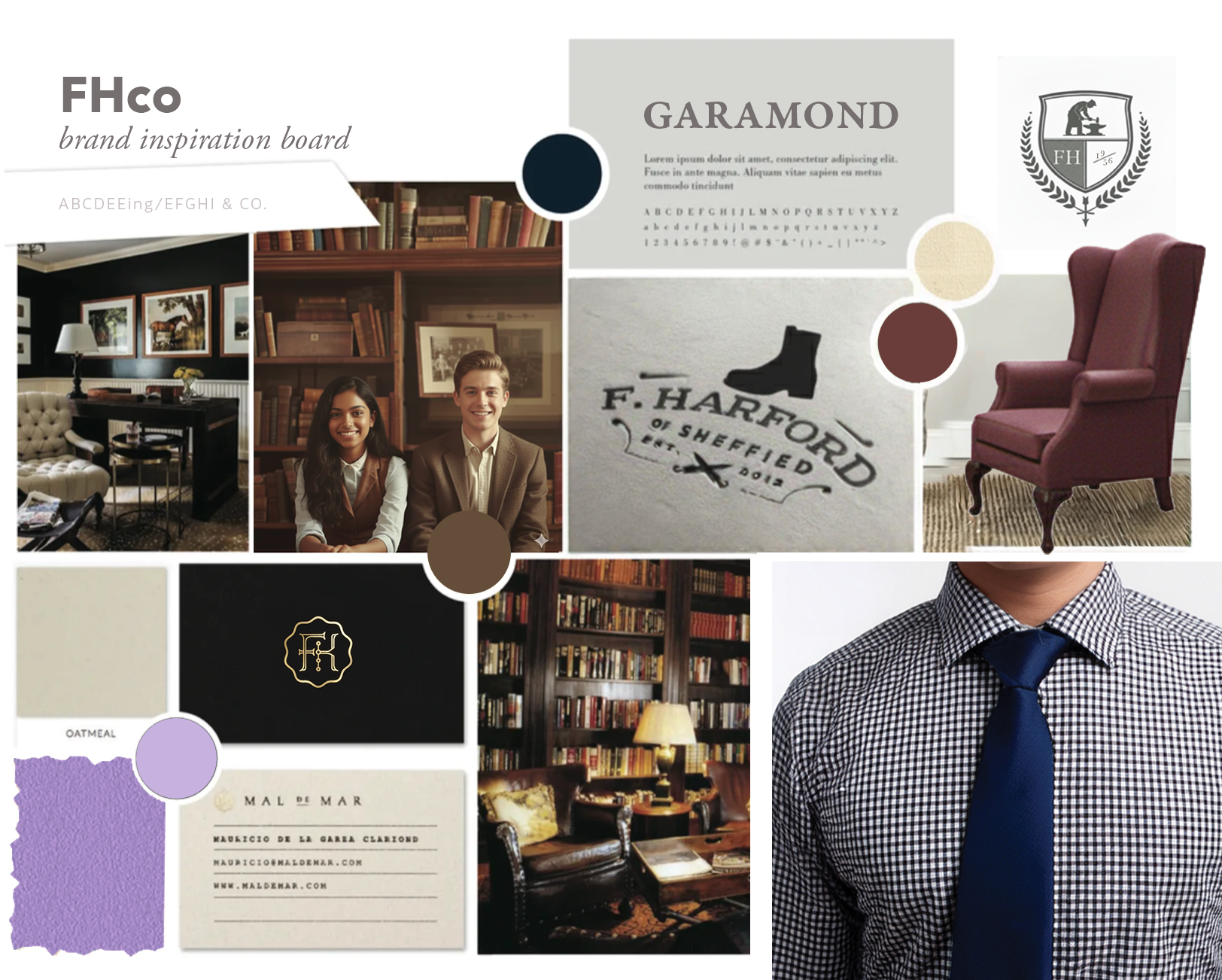
As with many things I write about, first you must have a conversation with your client. Understand clearly the audience and the specifics of your client’s product or service features, etc. some use the phrase - personality of the brand, get to understand it.
What I like in this board above are the snippet circles of the colour suggestions discerned and then overlapped tying in all the visuals.
A pitfall some make is letting this process of inspiration go on forever. Do not make it a board with overwhelming choices and options. We are not able to synthesize properly when we have too much to take in.
When teaching I use this tool below that I think is both concise but experimental but can also be open for interpretation. My student are to collect visuals for 5 categories and 5 adjectives as well. They are to pair them within their categories. As you can also see in the board area above to the left, they must first be clear about their client, the project, the ‘theme’ and brand voice as well as the project date for the project completion. Below is a sample board template with some visuals and words included. The trick here is not to be literal but inspirational, as they collect the options. At the same time they must demonstrate professionalism and organization - note the top right corner has their studio and contact info. They will almost absolutely be working with a team and you can imagine how important this clarity and legibility is!
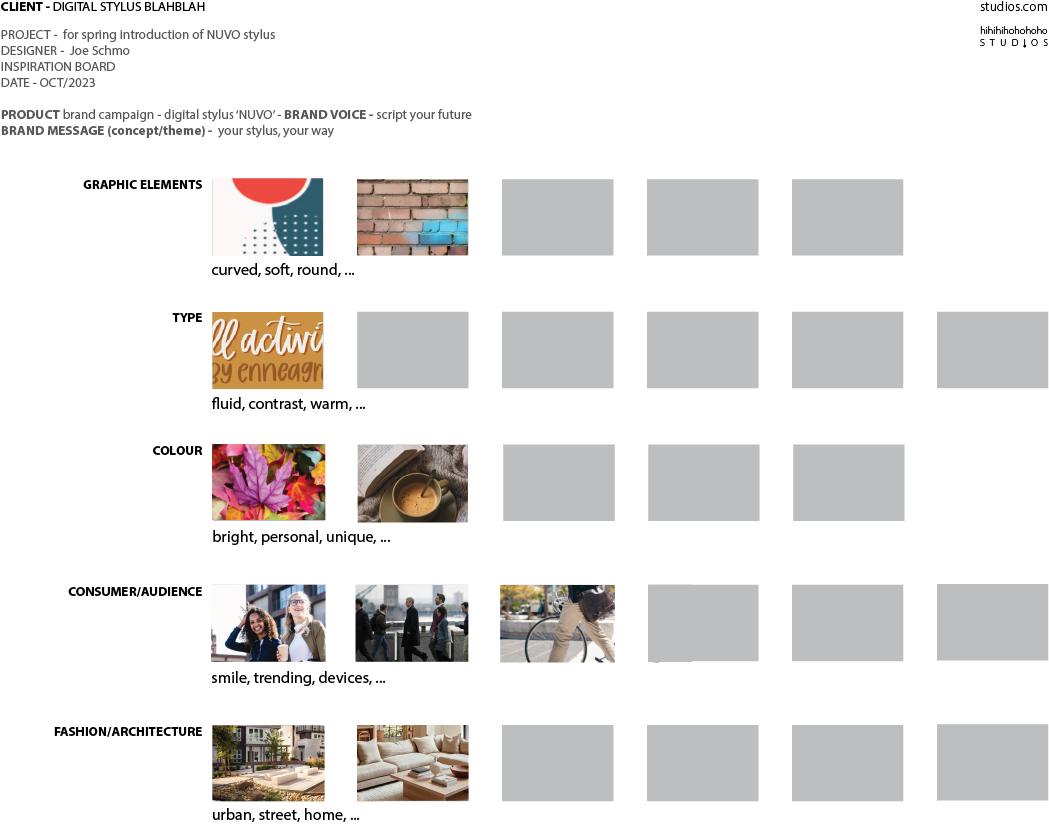
When starting with your inspiration I recommend starting with words and specifically phrases that clarify the product or service - you can use Ai to help you synthesis your language. Write a few sentence paragraphs to focus your project goals and theme.
Remember you aim to help with creative alignment but leave things open enough to inspire.
— the brand auditor —